On this page
- Frost around the vents: food is blocking them, so move it clear. 12
- Frost on interior walls: the door is not closing properly, so clear the door and clean the gasket. 12
- Condensation on the walls comes from moisture entering when the door is left open or from wet food. 12
- A warm interior wall on the side-by-side is heat-proof piping, which the manual says is not a system failure. 2
- Leave 5 cm of clearance at the rear and sides if the temperature runs warm. 1
Why is there frost around the vents of my Dacor refrigerator?#
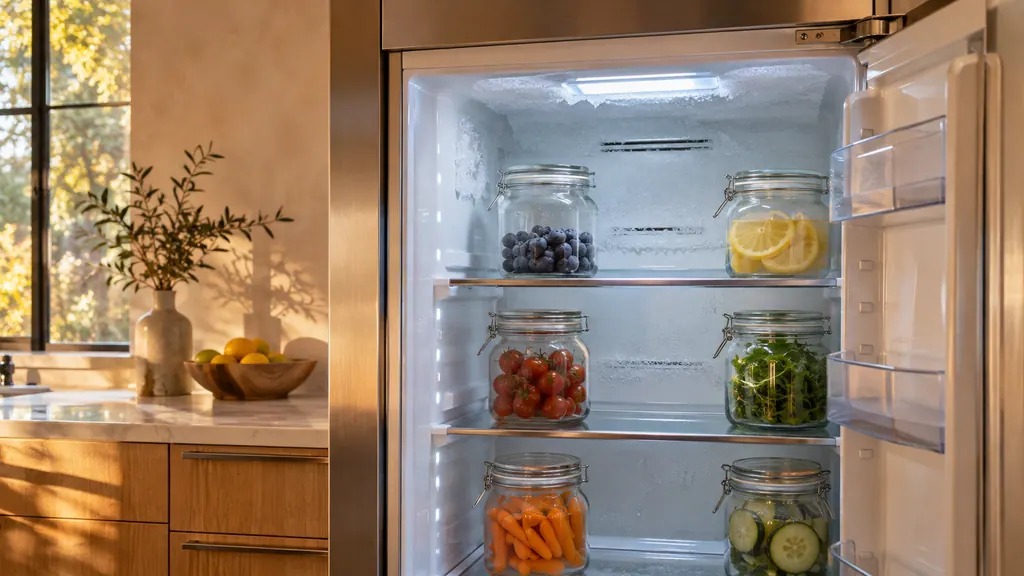
Because food is blocking the vents. That is the one cause the column and side-by-side manuals give for frost around the vents, and the fix is to keep food clear of them. 12
The column manual repeats the point in its usage cautions: do not place food too close to the vents at the rear, because it obstructs free air circulation in the compartment, and do not block the vents, especially with a plastic bag. 1 Look first at what sits against the rear wall.
Why is there frost on the interior walls?#
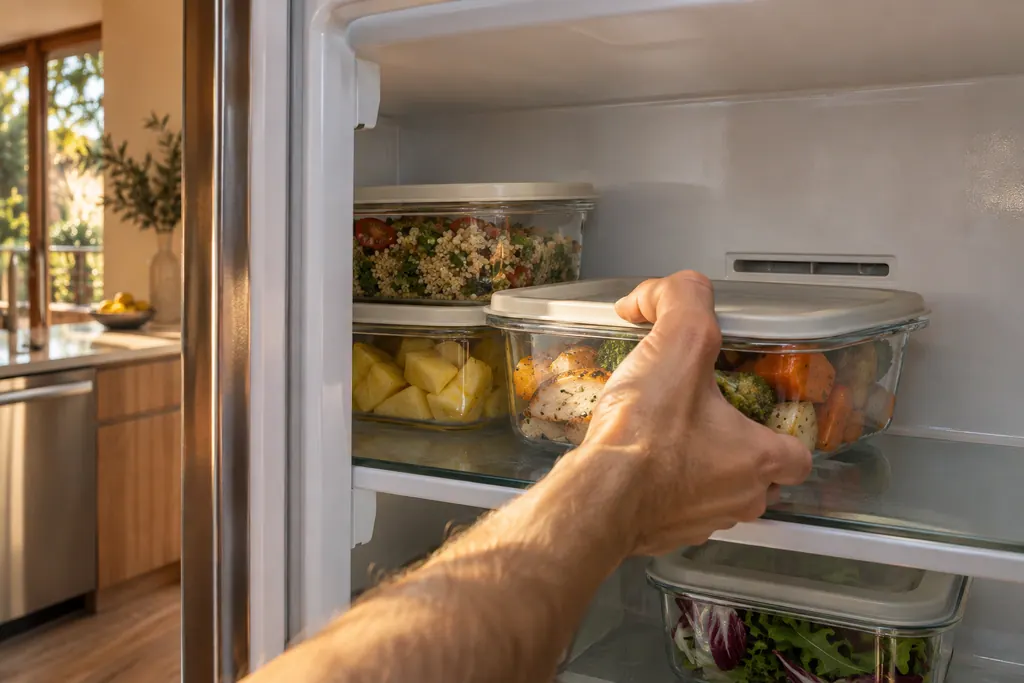
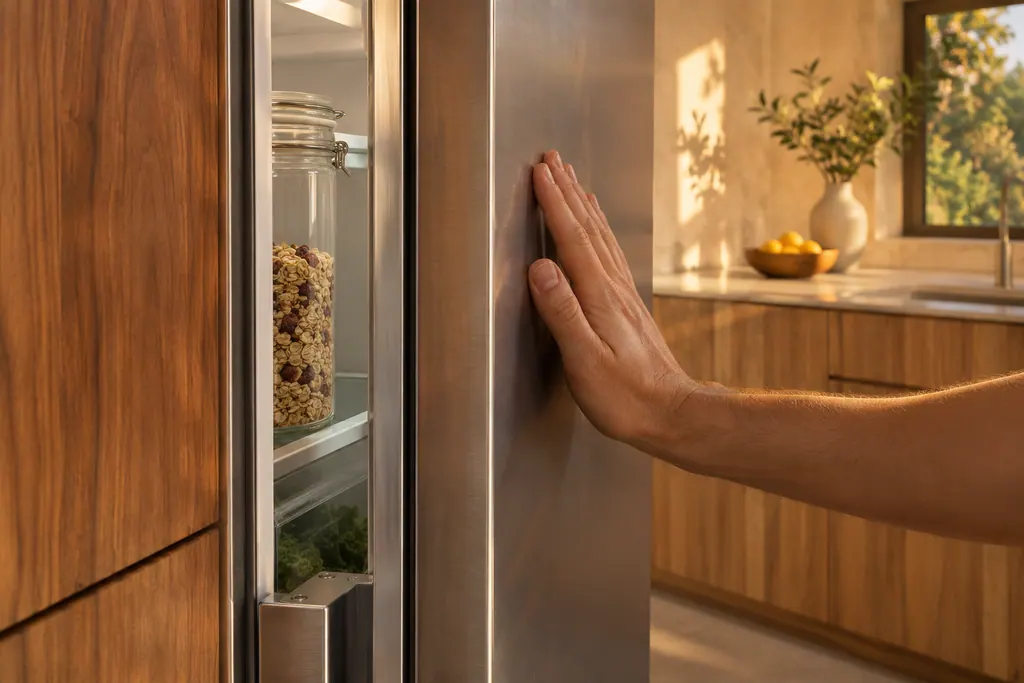
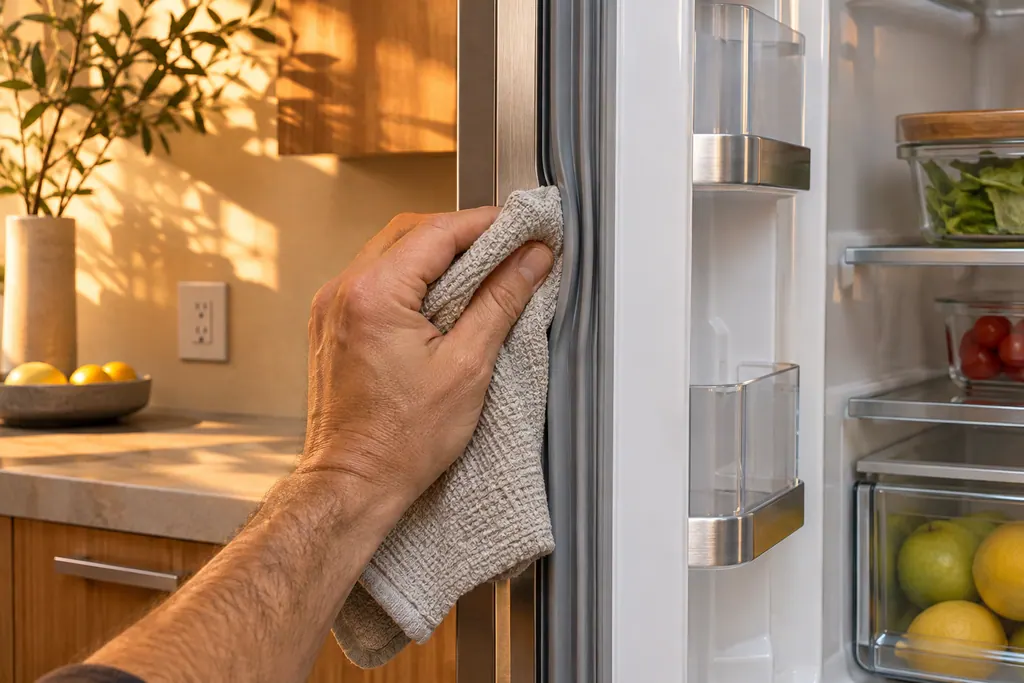
The manuals say the door is not closed properly. Make sure food does not block the door, and clean the door gasket. 12
So the check is practical. Open the door and look along its edge for something that holds it off the seal: a tall bottle on a door bin, a tray pulled forward or a drawer left a little open. Then wipe the gasket. Our door gasket entry shows what that rubber seal does.
| Sign | Manual's cause | Manual's remedy |
|---|---|---|
| Frost around the vents | Food is blocking the vents 12 | Make sure no food blocks the refrigerator vents |
| Frost on interior walls | Door is not closed properly 12 | Make sure food does not block the door; clean the door gasket |
| Moisture on interior walls | Door left open, or food with high moisture 12 | Remove the moisture; do not leave the door open; wrap food airtight |
| Warm interior wall (side-by-side) | Heat-proof piping in the interior wall 2 | Not a system failure |
How do I clear it, step by step?#
Start with the vents, then the door, then the gasket. These are the only fixes the manuals give for frost, so work through them in order and re-check the walls after a day of normal use. 12
The manuals do not say how long frost takes to disappear, so we do not either. If the frost grows back after the checks, that is useful information for a technician.
- 1
- 2
- 3
- 4
Is condensation on the walls the same as frost?#
No. The manuals list condensation as its own row. It forms when the door is left open and moisture enters, or when food with a high moisture content is stored uncovered. 12
The answer there is to remove the moisture, avoid leaving the door open for a long time, and wrap food airtight. 12 The wine column manual gives the same condensation row. 3 A Dacor column also has a door alarm: if it is enabled and a door is open more than 2 minutes, the alarm sounds and its indicator blinks. 1 That alarm is also an early hint of how long the door was open.
Why does the interior wall of my side-by-side feel hot?#
The side-by-side has heat-proof piping in the front corners and the interior wall to stop condensation. If the room temperature rises, the piping may work less well, and the manual says this is not a system failure. 2
So warmth at the front corners of a side-by-side is not a reason to call. A wall that feels warm while the compartment stays cold is, in the manual's words, expected. 2
Could the setting or the room be involved?#
Yes, two other rows in the temperature table are worth checking. If the compartment is over-cooling, the manual says the temperature control is not set correctly and to set the temperature higher. 1 On the column, the fridge can be set between 34 °F and 44 °F. 1
If the refrigerator runs warm, the manual lists a heat source or direct sunlight nearby, too little clearance at the rear and sides (at least 5 cm), and an overloaded compartment with food blocking the vents. 1 A built-in cabinet makes the clearance question a job for whoever fitted it.
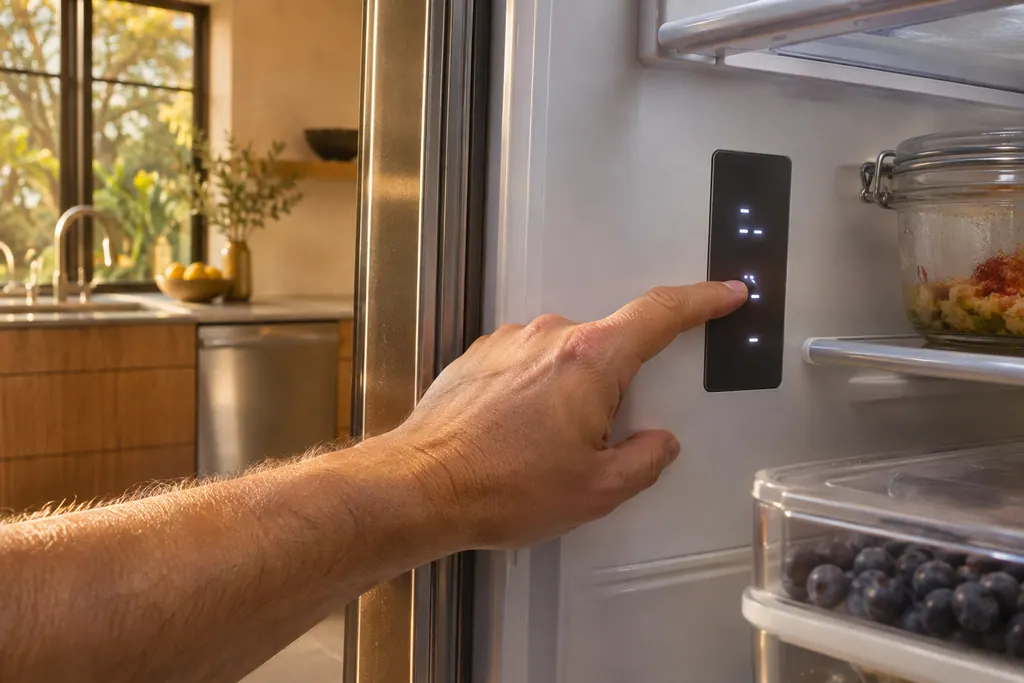
Power Cool is worth ruling out on a column. It runs the fan at maximum speed for several hours and then returns to the previous temperature, and the manual notes that it increases power consumption, so you should turn it off when you do not need it. 1 Press and hold Fridge for 3 seconds to switch it off. 1 If Power Cool was left on during a heavy shop and the compartment then ran cold, a return to the normal setting is a reasonable first check before frost is blamed on anything else.
Which Dacor models do these rows cover?#
The frost rows appear in the column refrigeration manual (DRR24980, DRR30980, DRR30990 and DRR36980) and in the 42-inch side-by-side manual (DYF42SBI). 12 The wine column manual has the vent and condensation rows but no frost row. 3
Column freezers have their own manual, so check it for your freezer. The picture to keep in mind is simple: a refrigerator compartment keeps cold air moving through vents, and food or an open door upsets that. This guide follows the wording of the two refrigerator manuals and adds nothing they do not say.
Could a door that never seals be the root cause?#
The undercounter beverage center manual has a row for this. The door will not close properly when the unit is not level, the door was reversed and not installed properly, the gasket is dirty, or the shelves are out of position. 4
Dirt on the gasket appears again as a cause in its not-cold-enough row, next to a door opened too often and one that is not shut all the way. 4 A door that sits ajar lets in humid air, and the refrigerator manuals link that to frost on the walls. 12 If you have rearranged shelves recently, put them back where they were. If the unit looks out of square in its cabinet, that is reason enough to call us and not to push harder on the door.
What should I write down before a visit?#
Note where the frost sits, what was stored next to it, whether the door closes flush and whether the alarm has sounded. Add the model and when you last cleaned the gasket.
A photo of the vent area and of the frost pattern helps us bring the right tools, and a note of anything you moved while checking tells us what has already been ruled out.
- Is the frost only at the vents, or on the walls as well?
- Does the frost return a few days after you clear it?
- Is the compartment cold enough, or warm?
- Has the door alarm sounded, or has the door been left open?
The manuals charge for service calls about normal situations, and they say so in the troubleshooting section. 12 Running through the list above first helps you tell a normal case from a part that needs a technician.
For the bigger picture, see our refrigerator service page. A refrigerator that also sounds odd is covered in our guide to Dacor refrigerator sounds, and the door alarm page explains the open-door alarm.
Sources#
- User Manual, Built-In Fridge DRR24980*** / DRR30980*** / DRR30990*** / DRR36980***Dacor (Dacor-branded document hosted on image-us.samsung.com) · DA68-03607B-07 (BRR9000M), 2020-12-11 · PDF p.14 (Usage cautions), p.20 (Fridge), p.22 (Door Alarm), p.42-43 (Troubleshooting: Temperature, Frost, Condensation)
- User Manual, Built-In Refrigerator DYF42SBI***Dacor (Dacor-branded document hosted on image-us.samsung.com) · DA68-03581A-04, 2020-12-11 · PDF p.46-47 (Troubleshooting: Interior wall, Frost, Condensation)
- User Manual, Built-In Wine Cellar DRW24980RAP/LAPDacor (Dacor-branded document hosted on image-us.samsung.com) · DA68-03607F-01 · PDF p.39 (Troubleshooting: Temperature, Condensation)
- User Manual, Undercounter Beverage Refrigerator DRR24G7400**Dacor (Dacor-branded document hosted on image-us.samsung.com) · BRR5500D, 2024-06-10 · PDF p.27 (Troubleshooting Guide)