On this page
- Lower rack: cookware up to 12 inches, plates in the center column, large pots facing down. 1
- Sanitize raises the final rinse to 167 °F; only Normal with Sanitize was designed to meet NSF 184. 1
- Delay Start waits up to 24 hours in one-hour steps. 1
- Changing the cycle after choosing an option releases the option. 1
- The door opening near the end of a cycle is Auto Release Dry and is normal. 1
How should I load a Dacor dishwasher?#
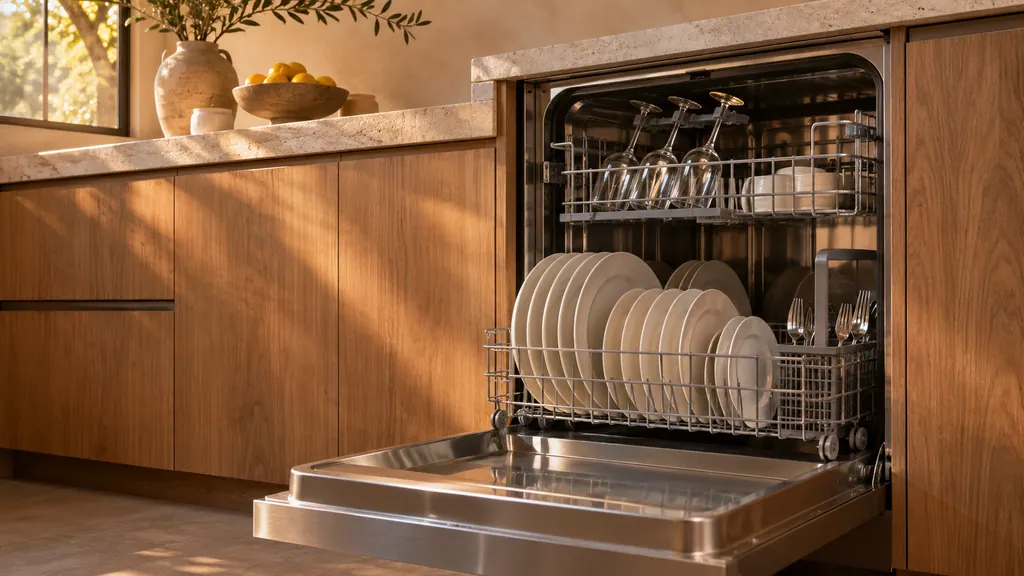
Put pots, pans and dinner plates in the lower rack, and cups, glasses and small plates in the upper rack. Face soiled surfaces toward the center and keep items away from the spray nozzles, which must turn freely. The manual says to check by turning the upper nozzle by hand. 1
This guide follows the manual for the Dacor 24-inch built-in dishwasher DDW24G9000AP, dated January 2024. Other Dacor dishwashers may differ. 1
What belongs in the lower rack?#
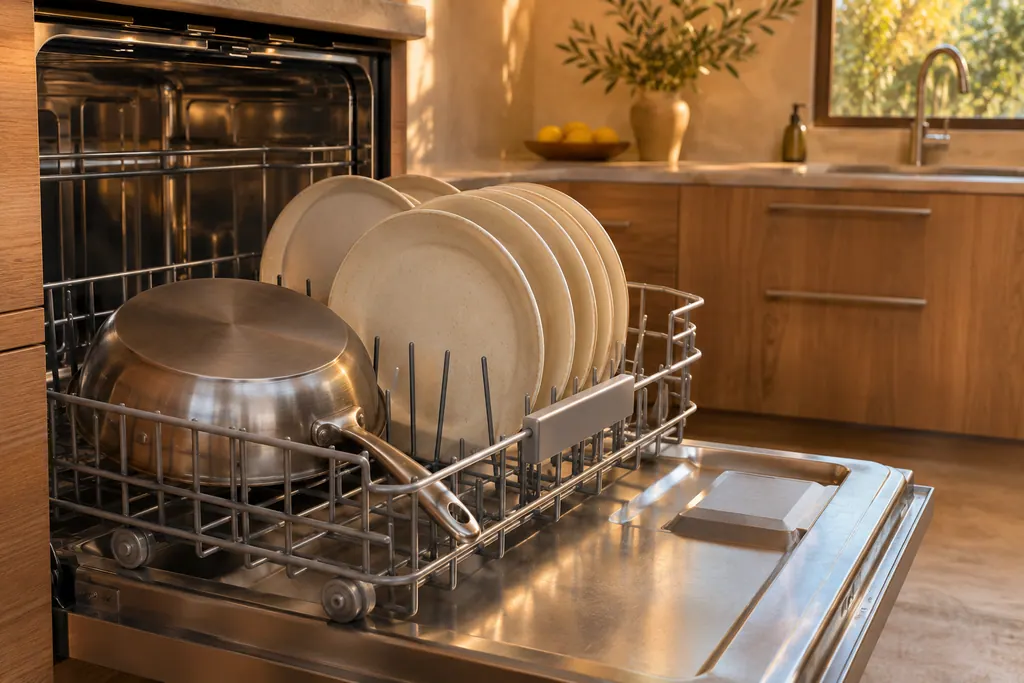
Cookware up to 12 inches (30 cm) across, plus dinner plates, soup bowls, lids and casserole dishes. Plates go in the center column with the top of each plate facing the bottom of the next, and large pots and pans go in with their inner cavities facing down. 1
For a heavily soiled item, use the Storm Wash+ area on the left side of the lower rack. When you pick the Storm Wash+ option, the dishwasher gives extra power to the water jet there, and pot handles must not catch the nozzle as it turns. 1
What belongs in the upper and third racks?#
Small plates, mugs, glasses and plastic items go in the upper rack, and flatware and utensils go in the third rack. Pull the upper rack out to load it so you do not strike the counter, and check that nothing blocks the nozzle under it. 1
The upper rack has three heights. Level 1 (low) suits tall cups and plates in the middle; it is also the release position. Level 2 (mid) suits typical dishes. Level 3 (high) suits large bowls or long utensils on the bottom. 1
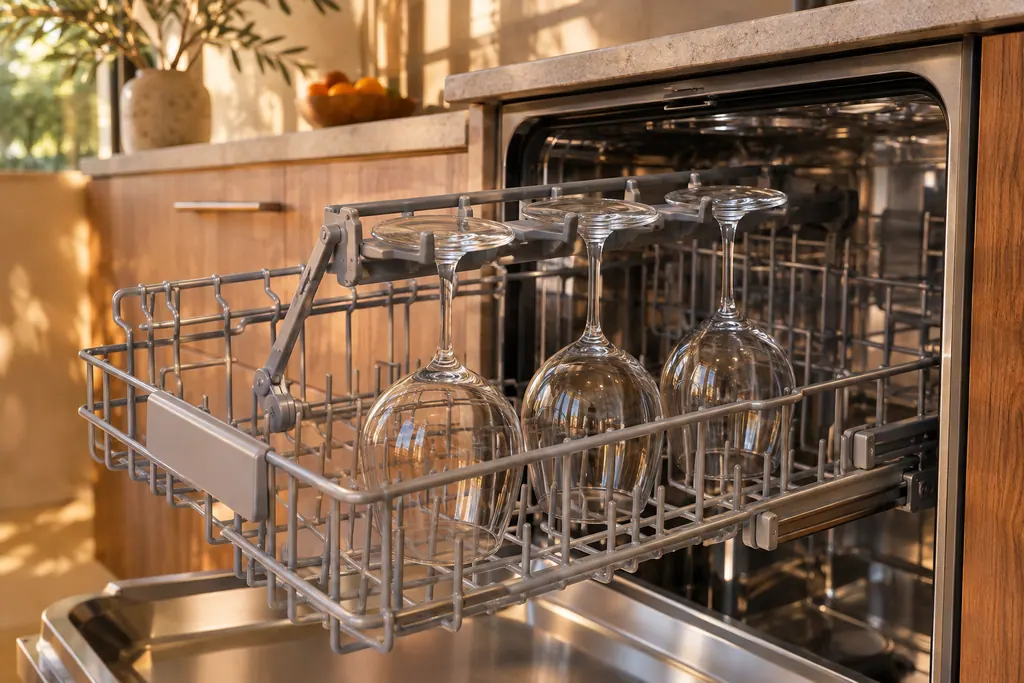
- Glass support. Hang wine glasses on the pegs of the cup shelves, and fold the support back when you do not use it. Do not change the rack level with the support propped up. 1
- Third rack. It suits flatware and cooking or serving utensils. The manual puts heavily soiled items in the standard third rack, and the rack can come out if you need room above. 1
- Cutlery rack. Put each knife, spoon or fork in its own stand to prevent chipping and discoloration. Do not let an item extend through the bottom, and put chopsticks in the third rack. 1
Which detergent and rinse aid are right?#
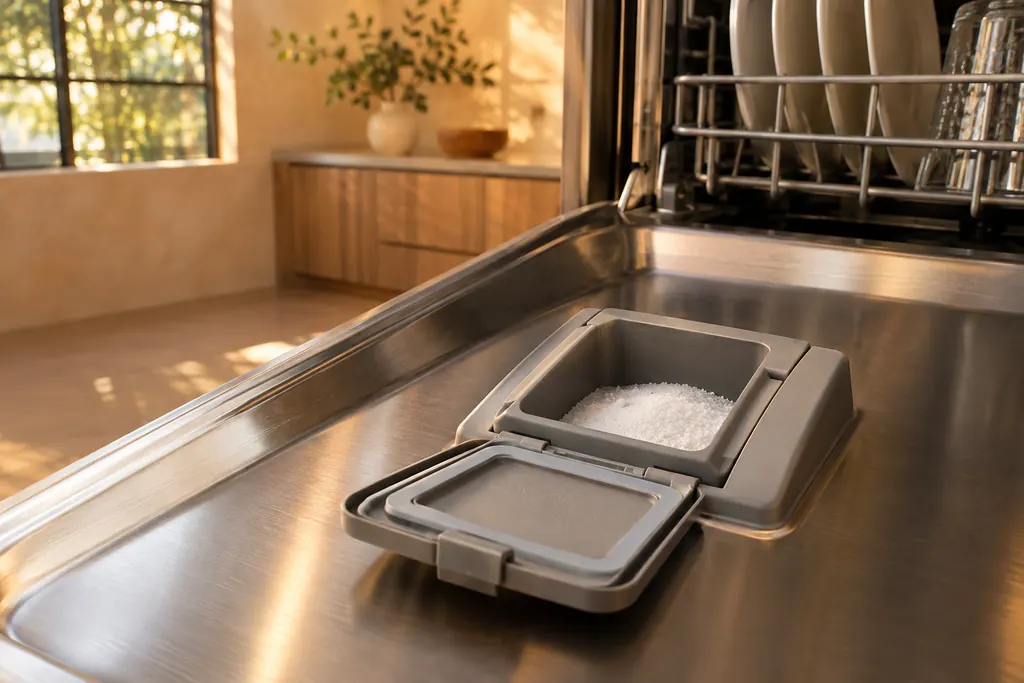
Dishwasher detergent only, in the main wash compartment, and liquid rinse aid in its own reservoir. The manual says other detergents foam too much, and that powdered rinse aid clogs the reservoir. Powder or gel detergent is the type it recommends. 1
Every cycle needs detergent, and the manual says there is no separate button for tablets. For heavily soiled dishes you can pour a small amount of detergent onto the door, which is used during the pre-wash. 1
Do not put detergent in the rinse aid reservoir, and do not fill the reservoir above its full mark, because the excess can overflow during a wash. When the Rinse Refill indicator lights, refill it. 1
What does Sanitize do?#
It raises the water temperature in the final rinse to 167 °F (75 °C). The Sanitize lamp blinks when the water passes 155 °F (68 °C), then stays lit until the option ends. Opening the door or pressing Power turns the lamp off. 1
The manual adds a limit: only the Normal cycle with Sanitize was designed to meet the soil-removal and sanitization requirements of NSF 184, and residential dishwashers are not intended for licensed food establishments. 1 For Sanitize it uses 3/4 oz (20 g) of detergent in the main dispenser and 1/3 oz (10 g) on the door for the pre-wash. 1
Sanitize also helps with drying. Rinse aid is recommended for drying, and selecting Sanitize improves it further. 1 If you change the cycle after choosing an option, the option is released, so choose the cycle first. 1
How does Delay Start work?#
You can delay a cycle by up to 24 hours, in one-hour steps. Press or hold Delay Start, and the hour shown is the time the wash will begin. Then press Start and close the door. 1
To change the delay after the dishwasher has started, turn it off and on again, select a new cycle and set the delay again. 1
- 1
- 2
- 3
- 4
- 5
Which cycle should I choose?#
Choose by soil level: Normal for regular loads, Heavy for heavy soil, Auto to let the machine judge, and Delicate for fine glassware. Express 60 takes about one hour. Plastic and Pre Blast cover plastic dishes and a quick rinse. 1
| Cycle | What the manual says | Source |
|---|---|---|
| Auto | Detects the soil level and starts the optimal cycle after a few minutes | 1 |
| Normal | For normally soiled dishes; the energy label is based on it | 1 |
| Heavy | For heavily soiled dishes | 1 |
| Delicate | For fragile items such as crystal; not for other glassware, which can cloud or etch | 1 |
| Express 60 | Washes quickly, about 1 hour | 1 |
| Pre Blast | Loosens large debris quickly, with no detergent or rinse | 1 |
| Plastic | For plastic dishes that are vulnerable to heat | 1 |
| Self Clean | Cleans the tub; run it empty and never as a dish cycle | 1 |
What is Auto Release Dry, and why did the door open?#
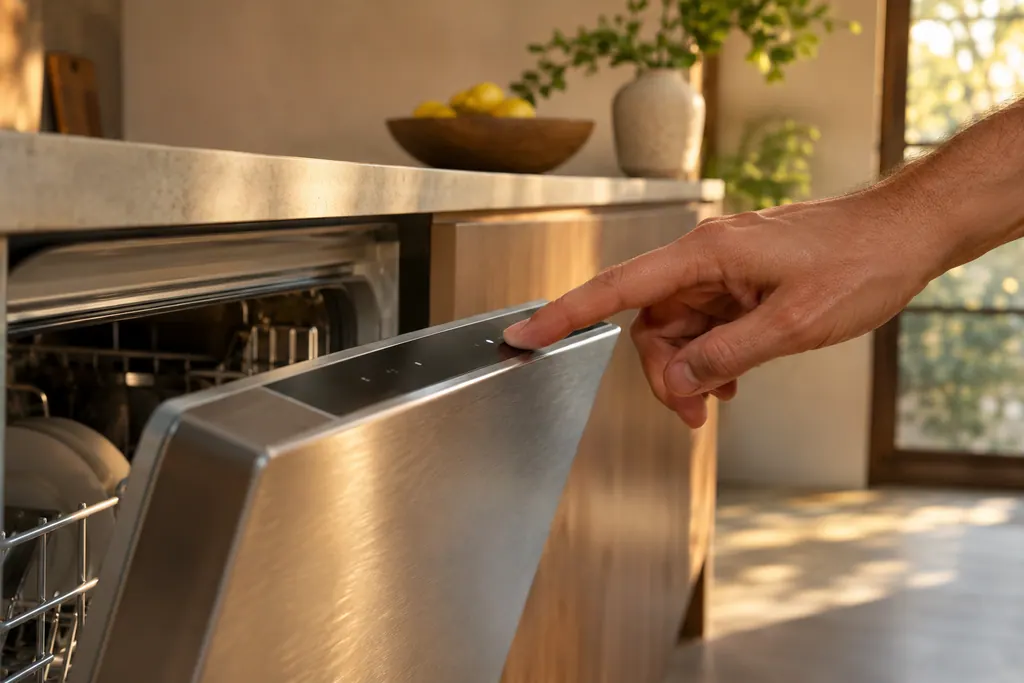
Auto Release Dry opens the door by itself 1 to 15 minutes before the cycle ends, to improve drying. The manual calls this normal, and says the door cannot be closed by hand for the next 2 minutes. 1
You can turn it off, but the manual warns that drying may suffer. In settings it is A1 (on) or A0 (off), and holding Lower Rack and Sanitize for 3 seconds also toggles it. 1
Which settings should I know about?#
The settings menu opens when you press Sanitize and Delay Start together for 3 seconds. It covers sound (U1 or U0), the Auto Release Dry alert (J1 or J0), rinse aid amount (F0 to F6), water hardness and Sabbath mode (H1 or H0). 1
The rinse aid default is F4; a higher number uses more rinse aid, so raise it for drying and lower it if dishes look discolored. 1 For water hardness the manual prints two defaults, Level 0 on one page and Level 4 on another, so check the level on your own display. 1
What if the dishes come out wet or dirty?#
Check the load first. The manual's troubleshooting rows tie food left on dishes to a wrong cycle, clogged filters or nozzles, too little detergent, low water pressure, cold supply water or an overloaded rack. It asks for water pressure between 20 and 120 psi and a hot supply. 1
For drying, the same rows name missing rinse aid, low water temperature, too many dishes, and Auto Release Dry turned off. 1 Our guide to filters and spray arms covers the cleaning rows, and the not cleaning page lists the wider checks.
The dishwasher service page shows the work we take on, and the dishwasher will not start page covers the case where nothing happens when you press Start.
Sources#
- User Manual, Built-In Dishwasher DDW24G9000APDacor (Dacor-branded document hosted on image-us.samsung.com) · DD68-00250L-00 (DW8700B), 2024-01-11 · PDF p.42-61 (Loading dishes, detergent and rinse aid, control panel, cycles, settings), p.71-72 (Checkpoints)